
Solar energy
Mezőcsát solar power plant
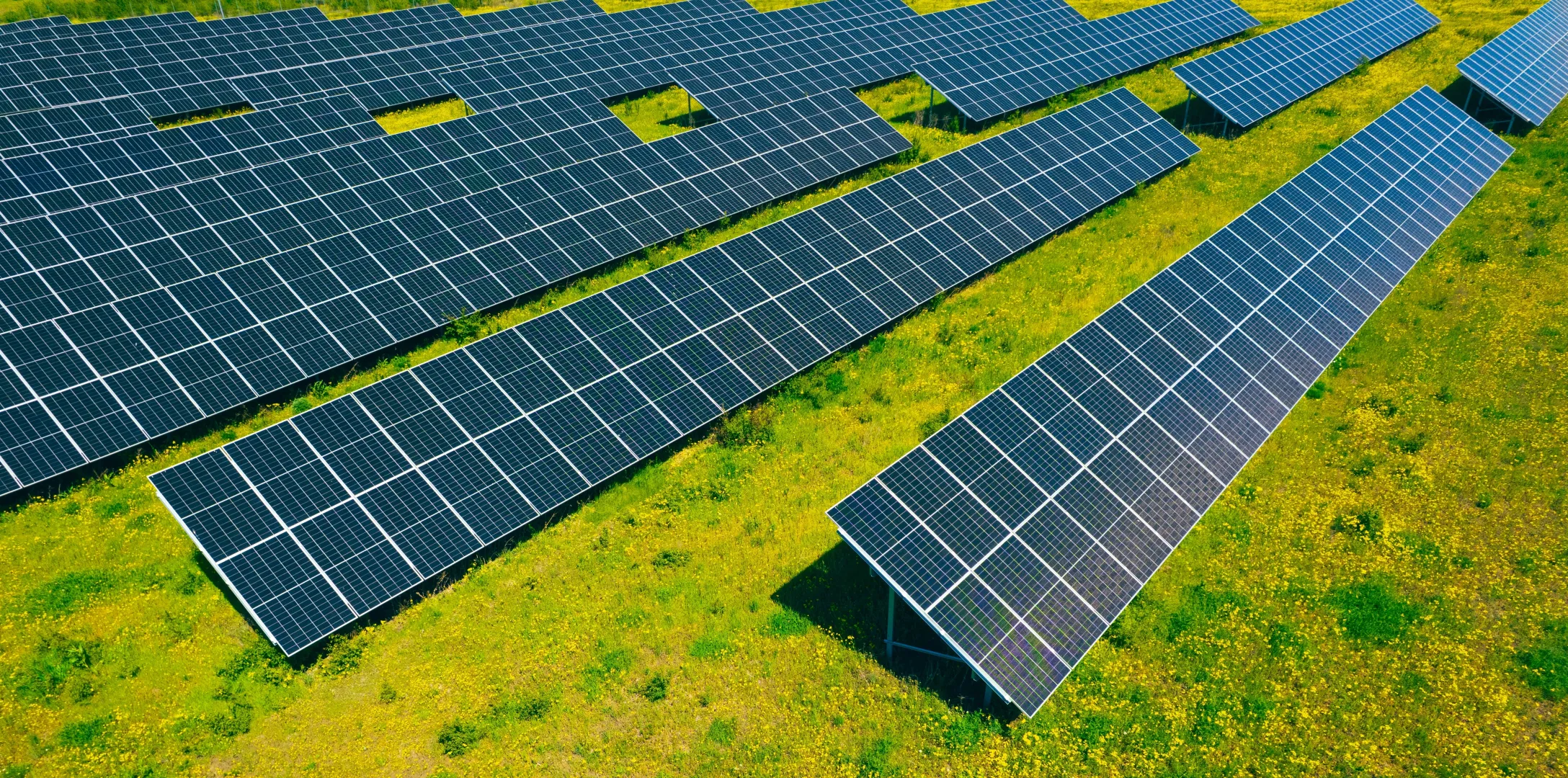
Commissioned in 2023 and operating under the KÁT scheme, the solar power park comprises five power plants located on adjoining sites. Covering more than 400 hectares, it is the largest solar power park in Hungary and one of the largest in Central Europe.
As part of the investment, we also built a 220 kV switching station, a 220/132 kV substation and a further five 132/22 kV substations in order to feed the electricity generated directly into MAVIR’s 220 kV transmission network.
When selecting the site, minimising the use of productive agricultural land was a key consideration. The facility was built on the site of an ageing orchard that had previously become unsuitable for use; following its clearance, we implemented comprehensive environmental impact mitigation measures.
As part of the development, we recultivated an abandoned mining area and an unmanaged spoil tip, and gave a new function to several disused agricultural facilities. By converting these, we created warehouses and other operational infrastructure serving the operation of the solar power park, reducing the need for new development. The abandoned facilities on the site that posed a potential environmental risk – including a former cold store, fuel filling station and chemical handling unit – were fully remediated.
In order to preserve natural assets, we undertook to operate a biomonitoring system over several years. As part of this effort, in close cooperation with experts from Bükk National Park, we protected the nesting sites of protected bird species and created a bee-eater reserve on the site.
To develop the infrastructure in the surrounding area, we reinforced unpaved dirt roads, making it easier for allotment owners and nearby agricultural producers to access their land.
The timber generated during site landscaping was offered free of charge to the municipality under the social firewood programme. In addition to municipal institutions, families in need also benefited from the timber, with the involvement of local civil organisations.
At every stage of the investment, we sought to involve local communities: during the construction period, local employees took part in installation and security tasks, while after commissioning, site management and maintenance work is also carried out by local labour.